Rekeying your home in Tacoma is more than just a precaution; it's a smart move for your security. If you've recently moved or lost your keys, you might be wondering about the best steps to take. Understanding when and why to rekey your locks can greatly impact your peace of mind. But what does the process involve, and how do you choose the right locksmith for your needs? Let's explore these essential aspects further.
Understanding the Importance of Rekeying
When you move into a new home or lose track of who's a key, rekeying your locks is crucial for your safety and peace of mind.
It guarantees that only you and those you trust have access to your space. Old keys can end up in the hands of previous owners, maintenance workers, or even friends, leaving your home vulnerable.
By rekeying, you can reset the lock mechanism, rendering those old keys useless. This simple step helps prevent unauthorized entry and gives you control over your home's security.
Plus, rekeying is often more affordable than replacing the entire lock system.
Don't underestimate the importance of feeling secure in your home; rekeying is a proactive measure you can take today.
When to Consider Rekeying Your Locks
Deciding to rekey your locks can be essential if you've recently moved, had a roommate move out, or misplaced a key. Each of these situations poses a risk to your home's security.
When you move into a new place, you can't be sure how many copies of the key are out there. If a roommate leaves, they might still have access to your home. Misplacing a key can also lead to unauthorized entry if someone finds it.
Additionally, if your locks are old or have become worn, rekeying can give you peace of mind. Ultimately, if you feel uncertain about who's access to your home, it's time to reflect on rekeying your locks for better security.
The Rekeying Process Explained
Rekeying your locks is a straightforward process that enhances your home's security.
You'll need specific tools and a clear step-by-step approach to get it done right.
Let's break down what rekeying is, what tools you'll need, and the exact steps involved.
What Is Rekeying?
If you've moved into a new home or lost track of who's keys to your property, rekeying is a smart and effective solution.
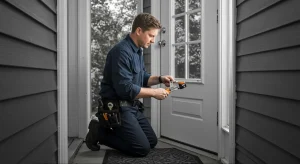
Fundamentally, rekeying involves changing the internal mechanism of your locks so that old keys no longer work. During this process, a locksmith will replace the pins inside the lock cylinder, allowing you to use a new key while rendering previous keys useless.
This method is often more cost-effective than replacing entire locks and can enhance your home's security considerably.
Rekeying is especially important after major life changes, like moving or divorcing, ensuring you have control over who can access your space.
It's a straightforward process that gives you peace of mind.
Tools Required for Rekeying
Before you start rekeying your locks, you'll need a few essential tools to guarantee the process goes smoothly.
Having the right equipment on hand makes all the difference. Here's what you'll need:
- Rekeying Kit: This includes the necessary pins and tools specific to your lock brand.
- Screwdriver: A flathead or Phillips screwdriver will help you remove the lock from the door.
- Tweezer: A pair of tweezers is handy for handling small pins during the rekeying process.
- Key Gauge: This tool assures you're using the correct size and type of key for your lock.
With these tools ready, you're set to enhance your home's security effectively!
Steps in Rekeying Process
While you may feel a bit intimidated at first, the rekeying process is straightforward and manageable with the right approach. Start by gathering your tools, then follow these steps:
- Remove the lock from the door.
- Disassemble the lock, taking care to note the original pin layout.
- Replace the pins with new ones that match your new key.
- Reassemble the lock and test it with your new key.
Here's a quick reference table for the pin sizes you might need:
| Pin Size | Number of Pins |
|---|---|
| #1 | 2 |
| #2 | 3 |
| #3 | 4 |
| #4 | 5 |
Benefits of Rekeying Over Replacing Locks
Rekeying your locks offers significant advantages compared to replacing them entirely, especially regarding cost and convenience. It can save you money and time while enhancing your home's security.
Here are some key benefits:
- Cost-Effective: Rekeying typically costs less than buying new locks and installation.
- Quick Process: A locksmith can rekey your locks in a fraction of the time it takes to replace them.
- Same Hardware: You maintain your existing hardware, preserving your home's aesthetic and minimizing disruption.
- Immediate Security: You can quickly change your keys after a security concern, ensuring peace of mind without delay.
Choosing the Right Locksmith in Tacoma
How do you find a trustworthy locksmith in Tacoma? Start by asking friends, family, or neighbors for recommendations.
Online reviews can also provide insights into a locksmith's reputation. Look for professionals who are licensed, insured, and bonded, as this guarantees they meet industry standards.
Once you've narrowed down your options, contact a few locksmiths to ask about their services, pricing, and experience. A reliable locksmith will gladly provide a quote and be transparent about their qualifications.
Be cautious of any locksmith who offers prices that seem too good to be true, as they may compromise on quality.
Ultimately, choosing a locksmith you feel comfortable with will give you peace of mind during your rekeying process.
Tips for Maintaining Your Home's Security
To keep your home secure, regular lock inspections are essential.
You should also consider upgrading your security systems to stay ahead of potential threats.
Regular Lock Inspections
While you may think your locks are secure, regular inspections are crucial for maintaining your home's security.
Checking your locks helps you identify potential weaknesses before they become a problem.
Here are four key steps to follow during your inspections:
- Check the Mechanism: Turn the key to verify it operates smoothly without jamming.
- Inspect for Wear: Look for signs of rust, corrosion, or visible damage on the lock and key.
- Test the Strike Plate: Make sure it's aligned correctly and not loose, providing a secure fit when the door is closed.
- Lubricate Regularly: Apply a lubricant to the keyhole and mechanism to keep everything functioning smoothly.
Upgrade Security Systems
Upgrading your security systems is a proactive step toward safeguarding your home. Start by evaluating your current setup and identifying any weak points.
Consider installing a modern alarm system that includes motion detectors and smart technology for real-time alerts. Video surveillance cameras can deter burglars and provide valuable evidence if a break-in occurs.
Don't forget about outdoor lighting; well-lit areas are less appealing to intruders. Regularly update your security software to protect against cyber threats, especially if you use smart devices.
Finally, inform your neighbors about your security upgrades; a vigilant community can enhance your overall safety.
Additional Security Measures to Consider
How secure is your home after rekeying?
While rekeying is a great first step, you should consider additional security measures to further enhance your home's safety.
Here are a few options to think about:
- Install a smart doorbell, Get real-time alerts when someone approaches your front door.
- Add motion-activated lights, Brighten up dark areas around your property to deter potential intruders.
- Upgrade window locks, Make sure all windows are secure with high-quality locks that can't be easily tampered with.
- Consider a security camera system, Keep an eye on your property and deter intruders with visible surveillance.
Taking these steps can greatly boost your home's security after rekeying, giving you peace of mind.
Cost Considerations for Rekeying Services
When considering rekeying your home, it is essential to understand the associated costs to make an informed decision. The price can vary based on several factors, including the type of locks, the complexity of the job, and whether you hire a professional or do it yourself. Here's a quick breakdown of what affects the cost:
| Service Type | What Affects the Cost | Additional Notes |
|---|---|---|
| DIY Rekey Kit | Lowest outlay, your own time | Suitable for standard locks. |
| Professional Service | Priced per lock | Includes labor and materials. |
| High-Security Locks | Higher hardware cost | Enhanced protection options. |
| Multiple Lock Rekeying | One service call plus a per-lock charge | Discounts may apply. |
| Emergency Services | After-hours rate | After hours or urgent needs. |
Understanding these costs helps you budget effectively for better home security.